


https___blogs-images.forbes.com_startswithabang_files_2018_08_candles-and-rulers

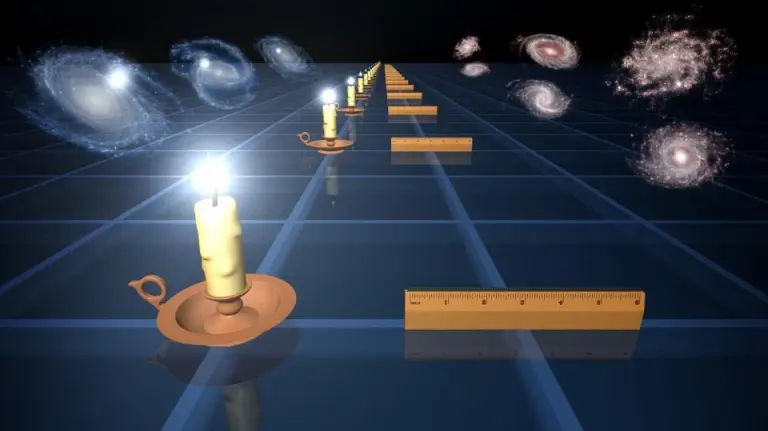
Two of the most successful methods for measuring great cosmic distances are based on either their apparent brightness (L) or their apparent angular size (R), both of which are directly observable. If we can understand the intrinsic physical properties of these objects, we can use them as either standard candles (L) or standard rulers (R) to determine how the Universe has expanded, and therefore what it’s made of, over its cosmic history. (Credit: NASA/JPL-Caltech)